The Tools of a Builder: Knowledge Held in Use
essays
Dec 29, 2025
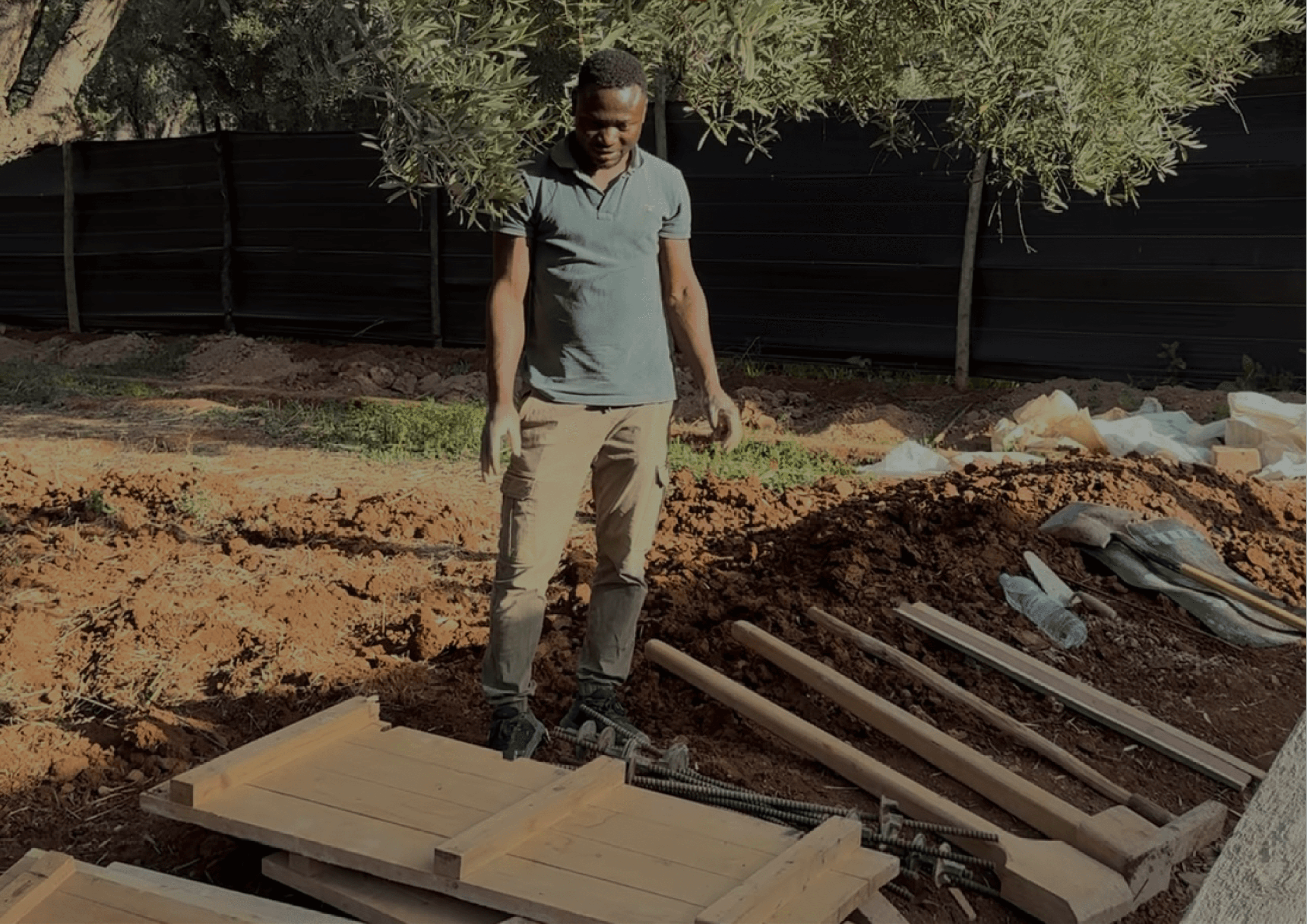
In Al Haouz, construction begins with tools. Simple in form and shaped by long use, they structure the relationship between the builder, the material, and the act of making. These instruments are not interchangeable objects, but precise responses to local techniques, materials, and conditions. Their value lies not in efficiency, but in understanding.
Where contemporary construction often separates the body from the building process, these tools require presence. They slow the work just enough to allow attention, correction, and care. In the hands of a craftsman, they become extensions of the body, translating intention directly into form.
Tools as Extensions of the Hand
A tool is never neutral. Its weight, balance, and surface determine how the body moves. Over time, the craftsman adapts to the tool, and the tool adapts to the craftsman. Handles are reshaped by grip, metal edges sharpened or softened according to preference. Familiarity grows through repetition.
In Al Haouz, tools are repaired rather than replaced. Wooden handles are remade, metal parts reforged, proportions adjusted. This care preserves knowledge embedded in use. Knowing how a tool behaves is as important as knowing the material it shapes.
Shaping Earth
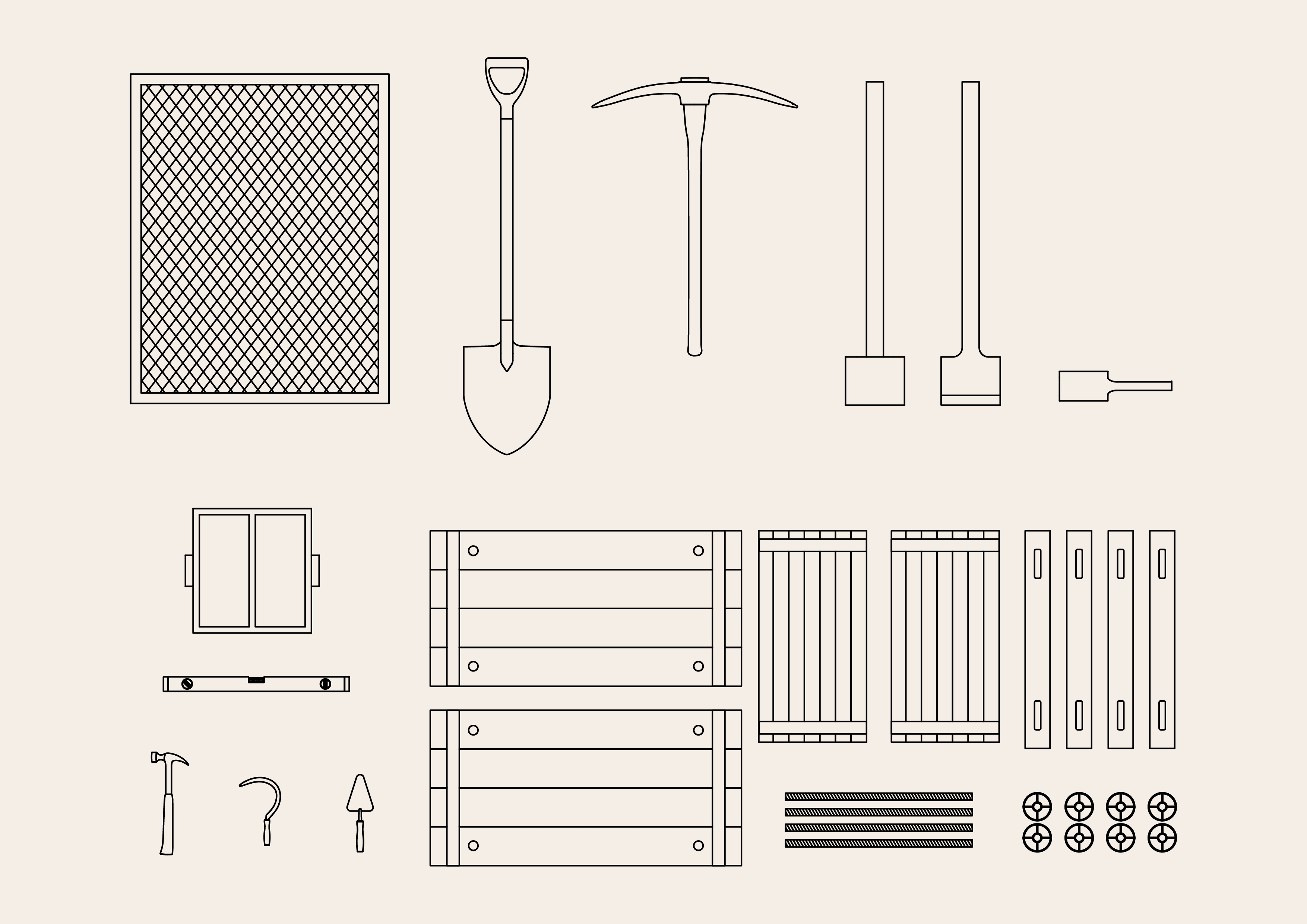
Rammed earth construction relies on the stamper (Al Markaz), a tool designed to compact loose soil into load-bearing structure. Different stampers are designed for different moments in the process: the standard stamper for the body of the wall, the edge stamper for corners and edges, and the small hand stamper for finishing the outer surface. The sound and resistance during tamping signal compaction quality as clearly as visual inspection.
The shovel (Al Balah) is essential in nearly every stage of construction. It carries earth, sand, lime, and crushed brick. It is used in digging, sieving, mixing, and transport, linking preparation to building. Though modest in appearance, it organizes the rhythm of work and the movement of materials across the site.

The pick axe (Al Fas) combines force and control. It loosens compacted soil, penetrates ground, and mixes thick materials such as adobe. During mixing, resistance felt through the tool reveals consistency. Correct density is known through the body, not measurement.

Stone and Precision
In stone masonry, the hammer (Al Matarqah) is an instrument of judgment. Each strike permanently alters the material. The craftsman reads the stone’s grain, hardness, and fracture lines before acting. Precision comes not from force, but from control and restraint.

The trowel (Al Mallas) mediates between stone and mortar. It spreads, presses, and corrects, ensuring contact and alignment as the wall rises. Its movements are small but continuous, contributing to both structural stability and surface coherence.

Selection and Form
Material quality depends on preparation. The sieve (Al Gharbal) controls the fineness of aggregates used in mortar, adobe, and rammed earth. Sieve sizes are selected based on different structural and surface requirements. The act of sieving is repetitive and time-consuming, yet essential. Consistency begins before construction starts.

The mold (Al Fargh) defines the adobe brick before it exists. Made of wood and locally produced, it fixes proportions and dimensions. Once filled and compacted, it leaves behind a form that must dry, harden, and eventually carry weight. Variations in molds reflect regional climate, material availability, and building tradition.

Holding Line and Structure
In rammed earth construction, the formwork (Al Luh) temporarily holds the future wall. Wooden panels, plates, and clamps resist pressure during compaction. Their alignment determines thickness, straightness, and surface quality. Though removed once the wall is complete, their influence remains visible.

The level (Al Qiyaas) ensures balance across all techniques. Whether laying stone, stacking adobe, or compacting earth, it confirms verticality and horizontality. It prevents small errors from accumulating, maintaining order throughout the building process.

Tools Carrying Knowledge
These tools evolve through use. Their forms shift subtly as craftsmen adapt them to changing materials, techniques, and personal habits. Some are inherited, marked by previous hands. Others are newly made but follow established proportions. In both cases, knowledge is transmitted through practice rather than instruction alone.
The tools of a builder in Al Haouz represent more than function. They embody a way of working that values attention, continuity, and material understanding. In a construction culture increasingly defined by speed and abstraction, these tools insist on presence. They remind us that building is not only about producing shelter, but about maintaining a relationship between people, materials, and place.